
Article
Performing Umrah is a deeply meaningful act of worship that Muslims can undertake at almost any time of the year. For many pilgrims, especially those traveling for the first time, understanding the exact steps before departure makes the journey smoother and allows them to focus fully on their devotion.
Umrah consists of four essential rituals performed in a specific sequence:
- Ihram: Entering the sacred state with the formal intention (Niyyah) and reciting the Talbiyah.
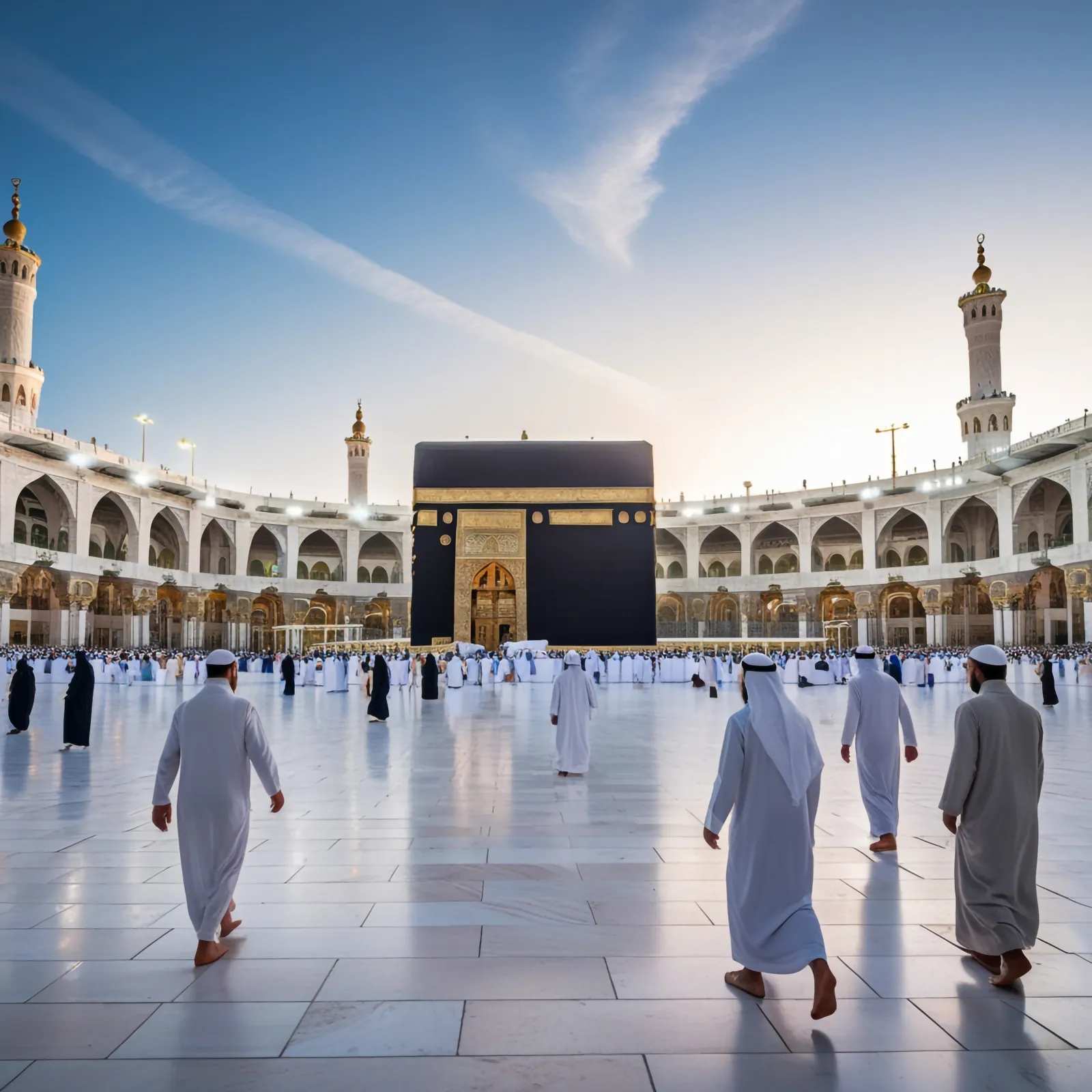
- Tawaf: Circumambulating the Holy Kaaba seven times in a counterclockwise direction.
- Sa’i: Walking seven times between the hills of Safa and Marwah.
- Tahallul: Shaving or trimming the hair to mark the completion of the Umrah rituals.
If you are planning your sacred journey, this practical guide outlines the core rituals, essential preparations, and key steps you should know before arriving in Makkah.
What Is Umrah?
Umrah is a sacred pilgrimage to the Holy Kaaba in Makkah that Muslims can perform at any time of the year. Unlike Hajj, which takes place on specific dates during the month of Dhul Hijjah, Umrah is not restricted to a set schedule.
All core rituals of Umrah are performed in and around Masjid al-Haram. While the overall travel experience involves various arrangements for transportation and accommodation, the spiritual rituals themselves follow a precise, fixed sequence:
- Entering into Ihram and making the intention
- Performing Tawaf
- Performing Sa'i
- Performing Halq or Taqsir
Understanding these four steps in advance helps first-time pilgrims feel fully prepared, confident, and spiritually focused once they arrive in Saudi Arabia.
Preparing for Umrah Before Your Journey
The foundation for a smooth and rewarding Umrah begins with thorough preparation long before you leave Pakistan.
To ensure a seamless experience, take the time to familiarize yourself with the core rituals, essential duas, and key locations within Masjid al-Haram. It is equally important to double-check all travel documents including your passport, visa, flight itineraries, and hotel reservations. Keep your crucial paperwork organized in a dedicated travel folder and carry physical photocopies along with digital backups.
When packing, tailor your luggage to the length of your stay and your personal health requirements. Essential items include comfortable walking footwear, appropriate clothing for Ihram, fragrance-free personal hygiene products, and any necessary prescription medications. Avoid overpacking, keeping your bags light makes navigating airports and moving between hotels significantly easier.
Step 1: Entering the State of Ihram
Ihram is the sacred state a pilgrim must enter before beginning the rituals of Umrah.
Attire and Preparation
Before assuming Ihram, pilgrims should perform basic personal hygiene, such as clipping nails and taking a bath (Ghusl).
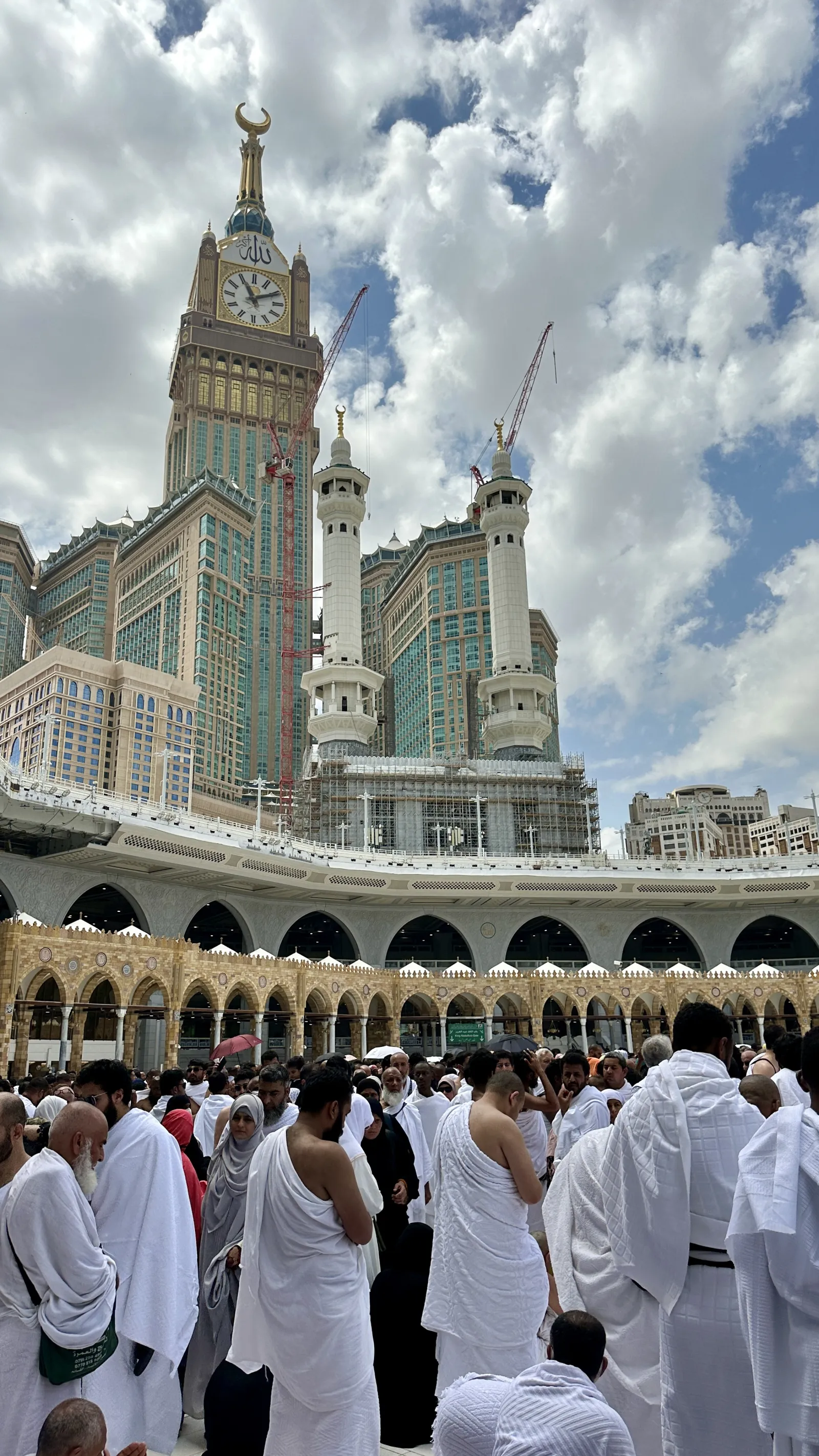
- For Men: Attire consists of two unstitched white sheets. one wrapped around the waist (Izar) and the other draped over the shoulders (Rida). Footwear must leave the ankles and the top of the foot uncovered.
- For Women: Attire includes any clean, modest Islamic dress that fulfills regular hijab requirements. Face veils (Niqab) and gloves should not be worn while in Ihram.
Intention (Niyyah) and the Miqat
The intention to perform Umrah must be made at or before crossing the designated boundary known as the Miqat.
- If you are flying directly to Jeddah or Makkah, airlines will make an announcement as you approach the Miqat.
- It is best to put on your Ihram garments at the airport or onboard before the flight reaches this boundary.
- Once at the Miqat, formally declare your intention (Niyyah) and begin reciting the Talbiyah:
"Labbayk Allahumma Labbayk. Labbayka la sharika laka labbayk. Innal-hamda wan-ni'mata laka wal-mulk, la sharika lak."
(Here I am, O Allah, here I am. Here I am, You have no partner, here I am. Truly all praise, favor, and sovereignty belong to You; You have no partner.)
Pilgrims continue reciting the Talbiyah frequently throughout their journey to Makkah until they begin Tawaf at Masjid al-Haram.
Important Restrictions During Ihram
Once in the state of Ihram, specific prohibitions apply until your Umrah rituals are complete:
- No Scented Products: Avoid perfumed soaps, deodorants, or scented wipes.
- Grooming: Do not trim hair or cut nails.
- Head Coverings (Men): Men must not cover their heads with caps, hoods, or towels.
- General Conduct: Arguments, inappropriate language, and marital relations are strictly prohibited.
Tip: Familiarize yourself with these rules before departure, and consult a knowledgeable scholar if you have questions regarding specific rulings or accidental violations.
Step 2: Performing Tawaf
Upon entering Masjid al-Haram, proceed to the Mataf area to begin Tawaf, circumambulating the Kaaba seven times counterclockwise.
- Start: Align yourself with Hajar al-Aswad (the Black Stone, indicated by a green light). Raise your right hand towards it and say "Bismillahi Allahu Akbar".
- Circuits: Keep the Kaaba to your left. Pray, recite Quran, or make personal duas in any language during your seven rounds.
- Sunnah Supplication: Between the Yemeni Corner (Rukn al-Yamani) and the Black Stone, recite:
"Rabbana atina fid-dunya hasanatan wa fil-akhirati hasanatan wa qina 'adhaban-nar." - After Completion: Offer two rak'ahs of prayer behind Maqam Ibrahim (or anywhere in the mosque), then drink Zamzam water before moving to Sa’i.
Praying After Tawaf
Two Rak'ahs Prayer: Offer two rak'ahs after completing Tawaf. While it is Sunnah to pray behind Maqam Ibrahim, you can pray anywhere in Masjid al-Haram to avoid blocking crowd flow.
Drink Zamzam: Head to a Zamzam station, drink facing the Qibla, and make dua—this is a blessed time for accepted supplications.
Transition: Rest briefly and prepare mentally for Sa’i.
Step 3: Performing Sa'i Between Safa and Marwah
After completing Tawaf and drinking Zamzam, proceed to the Mas'a area to perform Sa’i—walking seven times between the hills of Safa and Marwah.
- Starting Point: Begin at Safa. Face the Kaaba, recite the Quranic verse ("Innas-Safa wal-Marwata min sha'a'irillah..."), and make dua.
- Counting the Rounds:
- Lap 1: Safa to Marwah
- Lap 2: Marwah to Safa
- Continue until Lap 7, which ends at Marwah.
- Pace: Walk at a normal pace. Men briefly trot between the two green-light markers (Milayn al-Akhdarayn).
- Duas: Offer personal prayers and Dhikr along the way.
Step 4: Halq or Taqsir
The final step of Umrah is Halq (shaving the head) or Taqsir (trimming the hair).
- For Men: You may either shave your head entirely (Halq—which is preferred and carries greater spiritual reward) or trim your hair evenly all around (Taqsir).
- For Women: Gather your hair and cut roughly an inch (fingertip length) from the ends (Taqsir only—shaving is prohibited for women).
Completion: Once your hair is shaved or trimmed, you exit the state of Ihram. All restrictions are lifted, and your Umrah is now complete. Do not assume Umrah ends after Sa'i; this final ritual is required to complete the pilgrimage.
What to Do After Completing Umrah?
Once someone finishes Umrah, they may continue to spend time in Makkah for worship.
Many pilgrims offer voluntary duas, recite the Quran, and spend time in Masjid al-Haram.
If your travel package includes several days in Makkah, plan your visits according to your physical and mental condition.
Rest is also very helpful, especially after a long journey or after performing the physical acts of Umrah.
Pilgrims must avoid anything that might affect their health and must remain fit throughout their journey .
How to Plan Umrah with Pakistani Packages
For those travelling for Umrah from Pakistan, a number of practical arrangements must be made prior to departure.
These can range from visa support to flights, lodging and transportation.
For those looking for a specific Umrah package, there are options to suit every budget and travel preference, including short and long packages, economy accommodation, and luxury travel packages.
Frequently Asked Questions
What are the steps of Umrah?
The principal steps are getting into Ihram and making the intention, performing seven rounds of Tawaf, acting seven rounds of Sa'i between Safa and Marwah, after which Halq or Taqsir.
Am I able to perform Umrah without a guide?
The steps of Umrah can be learned before the Umrah, you are a first -time traveler to the holy land, it can be helpful to obtain proper guidance in advance.
Any religious questions should be directed to a qualified Islamic scholar.
How long does Umrah take?
Umrah can take several hours, depending on the crowd , walking speed, and the health of the pilgrim, among other factors.
Are elderly people able to perform Umrah?
Yes . Elderly pilgrims are able to perform Umrah, however, several factors need to be considered when traveling, including mobility, accommodation , transportation, and health needs.
What do I do after completing Sa'i?
Pilgrims perform the seventh round of Sa'i at Marwah, then carry out Halq or Taqsir as required.
Final Thoughts
Understanding how to perform Umrah before setting off helps pilgrims prepare mentally and spiritually, giving them a clear idea of what to expect every step of the way.
The core rituals involve assuming the state of Ihram, declaring the intention (Niyyah), performing Tawaf and Sa'i, and finally completing Halq or Taqsir. Familiarizing yourself with these steps in advance minimizes confusion, especially for first-time pilgrims.
Alongside religious preparations, travelers must organize their travel documents including passports, visas, flight bookings, hotel accommodations, and ground transport well before departure.
If you are exploring tour packages and preparing for your Umrah journey from Pakistan in 2026, DTravel offers tailored packages designed around your specific needs. Plan thoughtfully, learn the essential rituals, and embark on your pilgrimage with clarity and confidence.